CNC machines rarely malfunction without warning. It may start with extended delivery times or experienced machinists spending more time managing limitations than machining parts. These inefficiencies can limit you in terms of consistency and competitive production.
As constraints persist, unplanned downtime can disrupt schedules and increase dependence on secondary processes that don’t sustain throughput. Explore when to upgrade your CNC machine to enhance efficiency and growth.
1. Downtime Costs Exceed Replacement Value
A widely referenced guideline in asset management is the 50% rule. If repair and maintenance costs approach or exceed 50% of the machine’s replacement cost, continued investment rarely makes financial sense. At that point, you are subsidizing inefficiency.
Older CNC machines diminish returns on repair investments because each dollar spent on maintenance provides less reliability and uptime. Components may fail frequently, and technicians may spend more time troubleshooting interdependent systems.
Downtime can trigger a chain reaction across the operation, including:
- Lost production hours.
- Expedited shipping.
- Rescheduling costs.
- Deferred or declined bids.
- Overtime labor to meet delivery commitments.
2. Spare Parts Are Obsolete or Hard to Find
As original equipment manufacturers (OEMs) discontinue legacy platforms, components become scarce. This scarcity results in lead times stretching from days to weeks or months, requiring you to either stock expensive spares or experience prolonged downtime.
In turn, maintenance teams may resort to refurbished or aftermarket components to keep machines running. This approach may offer short-term relief, but refurbished parts often lack warranties, and compatibility issues can create failures elsewhere in the system.
Modern CNC platforms reduce this exposure. Manufacturers provide access to spare parts and technical support, allowing you to plan maintenance strategically.
3. Tolerance Drift and Quality Rejects
As machines accumulate hours, wear on components introduces tolerance drifts that become difficult to correct through calibration alone. The result is a gradual increase in out-of-tolerance parts, reworks and scrap.
For manufacturers serving regulated or high-spec industries, increases in rejection rates carry consequences. Quality discrepancies affect customer trust, while rejects consume labor and material.
A CNC machine and equipment upgrade addresses these issues through thermal control and stable spindle designs. When paired with integrated machining capabilities, they also reduce cumulative error caused by multiple setups, which helps improve process control.
4. Setup Times Cutting Into Profits
Older CNC machines often require manual fixturing changes, repeated indicating and alignment checks between operations. Each setup introduces variability and consumes skilled labor that could otherwise be machining parts.
As batch sizes shrink and product mix increases, setup inefficiency can be exacerbated. What once felt manageable in high-volume environments can become a recurring bottleneck that limits throughput and flexibility in scheduling.
Integrated systems consolidate multiple CNC machines into one, thereby improving spindle use and schedule predictability.
5. Multiple Setups Required for Single Parts
When a single part requires turning on one platform and milling on another, each transfer introduces positional error. Even with careful fixturing, these deviations can accumulate, which increases the risk of rework.
Multi-machine workflows also increase handling time and work-in-progress inventory. Parts sit in queues between operations, which extends lead times and complicates scheduling. This fragmentation can be difficult to manage at scale.
Integrated machines designed for CNC facing and turning in one machine can complete complex parts in a single operation, improving accuracy and streamlining cycle time.
6. Turning Down Complex Work
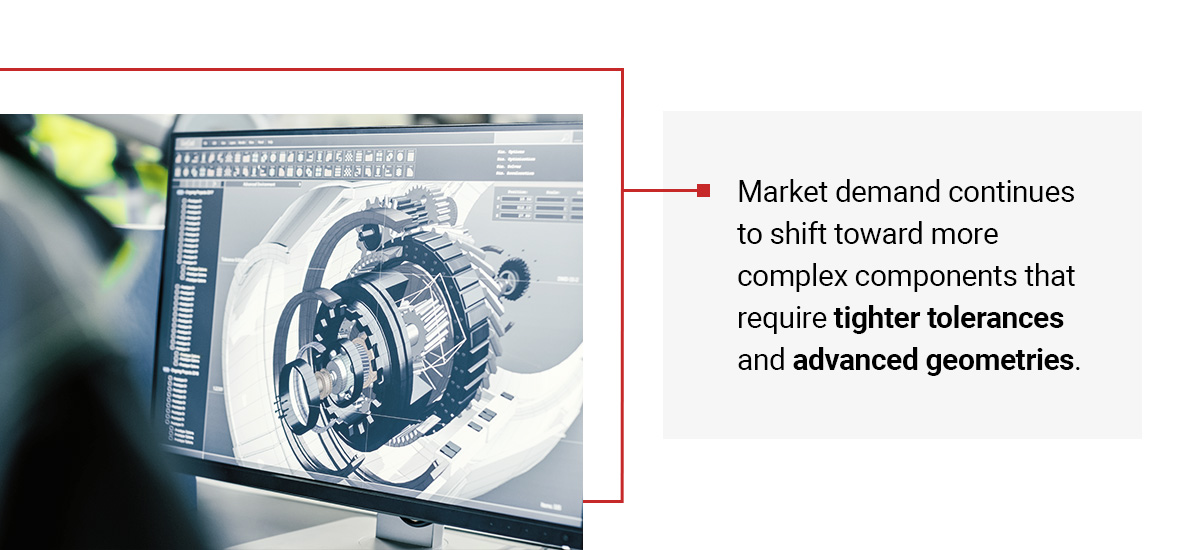
Market demand continues to shift toward more complex components that require tighter tolerances and advanced geometries. When your CNC machine limits you to simpler parts, you gradually position your business toward lower-margin work while competitors take on more profitable contracts.
Older CNC machine designs may lack the:
- Structural rigidity required to maintain accuracy during aggressive cuts.
- Axis configuration needed for complex interpolation.
- Control sophistication required for advanced contouring.
As a result, cycle times become harder to predict, and quality assurance cannot be guaranteed.
This limitation influences customer behavior. Customers learn which suppliers can reliably handle complex work and which cannot. Once a manufacturer is perceived as limited in capacity, it becomes challenging to reclaim that position.
Upgrading to equipment with integrated facing and contouring head capabilities enables confident quoting and strengthens relationships with customers who value technical competence.
7. Floor Space Is a Constraint
Floor space is a finite and expensive resource for manufacturers operating near capacity. When production volumes grow, the response may be to add machines to address specific bottlenecks.
However, each additional machine introduces secondary costs that extend beyond its physical footprint, including:
- Complex power distribution and coolant infrastructure.
- Reduced maintenance accessibility and longer service interventions.
- Inefficient material flow and increased work in progress.
- Longer operator travel paths and supervision challenges.
CNC machine consolidation enables manufacturers to replace multiple single-function machines with integrated systems, which increases output per square foot while simplifying the production environment.
8. Software Incompatibility Issues
Legacy CNC controls often struggle to integrate with modern computer-aided design (CAD) and computer-aided manufacturing (CAM) platforms and manufacturing execution systems. This disconnect creates friction between engineering and production. Programs may require manual modification or data must be transferred through workarounds that increase the risk of error.
Software-incompatible systems introduce challenges, such as:
- Longer programming cycles.
- Delayed releases to the shop floor.
- Inconsistent revision control across machines.
- Limited ability to standardize processes across facilities.
Modern CNC platforms support seamless data flow from design through execution. Improved integration reduces setup errors and enables accurate simulation before a part reaches the machine.
9. Safety Compliance Gaps
Safety expectations evolve alongside technology, and older CNC machines often struggle to meet the standards set by the Occupational Safety and Health Administration (OSHA). Inadequate guarding, outdated emergency stop systems, limited interlocks and poor diagnostic visibility all increase the risk of incidents.
When machines are unsafe or unpredictable, it may result in:
- Hesitation during operation.
- Informal workarounds that bypass safeguards.
- Reduced engagement and confidence on the shop floor.
Upgrading to modern CNC machines with integrated safety systems with improved guarding, smarter diagnostics and intuitive interfaces creates a safer working environment. These models also reduce liability exposure.
10. Labor Shortages Limit Production
Skilled labor shortage is a persistent challenge facing U.S. manufacturers. When experienced machinists are difficult to hire or retain, equipment that requires constant manual intervention becomes a liability. Older machines may also require more hands-on attention, necessitating skilled operators to perform tasks that add minimal value.
This constraint caps output because machines cannot run efficiently without continuous oversight. It also makes manufacturing roles less attractive to younger machinists who expect modern, technology-driven workflows, which widens the labor gap.
Integrated CNC machines reduce labor intensity. They enable manufacturers to produce more with the existing workforce by consolidating operations and streamlining setups. This equipment also creates roles that support programming and process optimization — areas that align more closely with the expectations and strengths of the next generation of machinists.
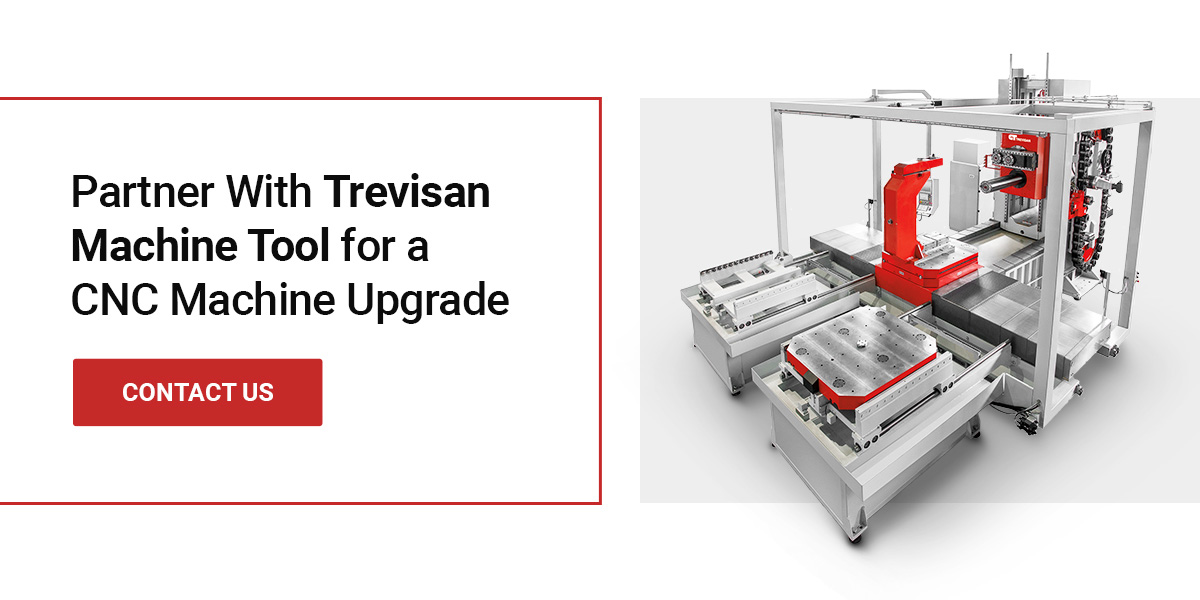
Partner With Trevisan Machine Tool for a CNC Machine Upgrade
CNC modernization is more than just replacing old equipment, it’s about investing in systems that support productivity. Trevisan Machine Tool manufactures CNC machines that reduce complexity, improve efficiency and support long-term consolidation strategies.
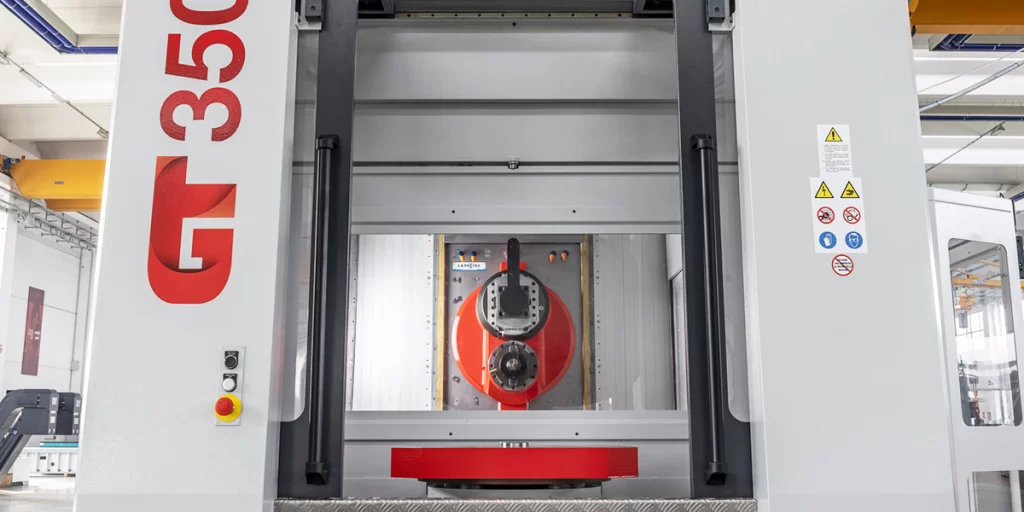
Our machines feature a dual-spindle design that allows you to perform milling and turning operations in the same setup. The integrated facing and contouring head further expands your ability to handle complex geometries. Every machine comes with a comprehensive manual detailing all common G-codes, M-codes and other variables you need. We also provide operator training, guidance on tooling and fixturing, and turnkey options to get your machine fully operational.
As a U.S.-based company, we provide local support and reliable access to spare parts. While we offer a range of standard machines, our team can build customized solutions tailored to your product and production requirements. Contact us today for a CNC equipment upgrade.